

On this page
Choose by what already exists
What can each option honestly show?
The three techniques start from different material. The project plans, a real photo of the room, or a description the model interprets on its own. The table sums up what you can honestly show with each one, what you need to commission it and which disclosure it needs, on portals, on your website or on the hoarding at the site.
| Criterion | 3D render | Virtual staging | AI image |
|---|---|---|---|
| Starting point | Plans, elevations and the specification. | A real photo of the empty room. | A description or a photo, plus whatever the model decides. |
| What it can honestly show | Volumes, layout, light and finishes that are in the project. | How the existing room could be furnished. | A mood or an idea, with no guarantee of sizes or materials. |
| What you need to brief it | Dimensioned plans, chosen materials and the real orientation. | Sharp photos, room measurements and a list of what stays and what goes. | A photo or a text, and time to check every result. |
| Main risk | Showing finishes or views that change later. | Buyers assuming the furniture or the light is really there. | Windows, doors or dimensions that do not exist. |
| Disclosure needed | That the home is planned or under construction (Catalan Housing Act, Article 59). | That the furniture is virtual and, if AI did it, that the image was altered. | That the image was generated or manipulated with AI (AI Act, Article 50(4)). |
When is a 3D render the right choice?
A 3D render makes sense when what you are selling cannot be photographed yet. That is the case for an off-plan development in Girona or a flat you want to show renovated. It is built from dimensioned plans, elevations, the specification and the real orientation, which is why you can stand behind it.
Before you commission it, settle what will be seen. Flooring, joinery, kitchen and the view from each window need to be decided, because in Catalonia what appears in advertising can be claimed by the buyer (Llei 18/2007, Article 58.4). At crida studio we start from the plans and the specification, and we put in writing what is final and what is indicative.
I added virtual furniture to a real photo. Do I have to say so?
Always say so. If an AI tool placed it and the image could pass for real, Article 50(4) of the AI Act requires you to disclose that it was artificially manipulated. Article 50 only covers AI systems. If a person placed it with editing software and no AI, the Catalan Housing Act (Article 58.3) still requires you not to mislead buyers. Either way, say the furniture is virtual.
When is virtual staging the right choice?
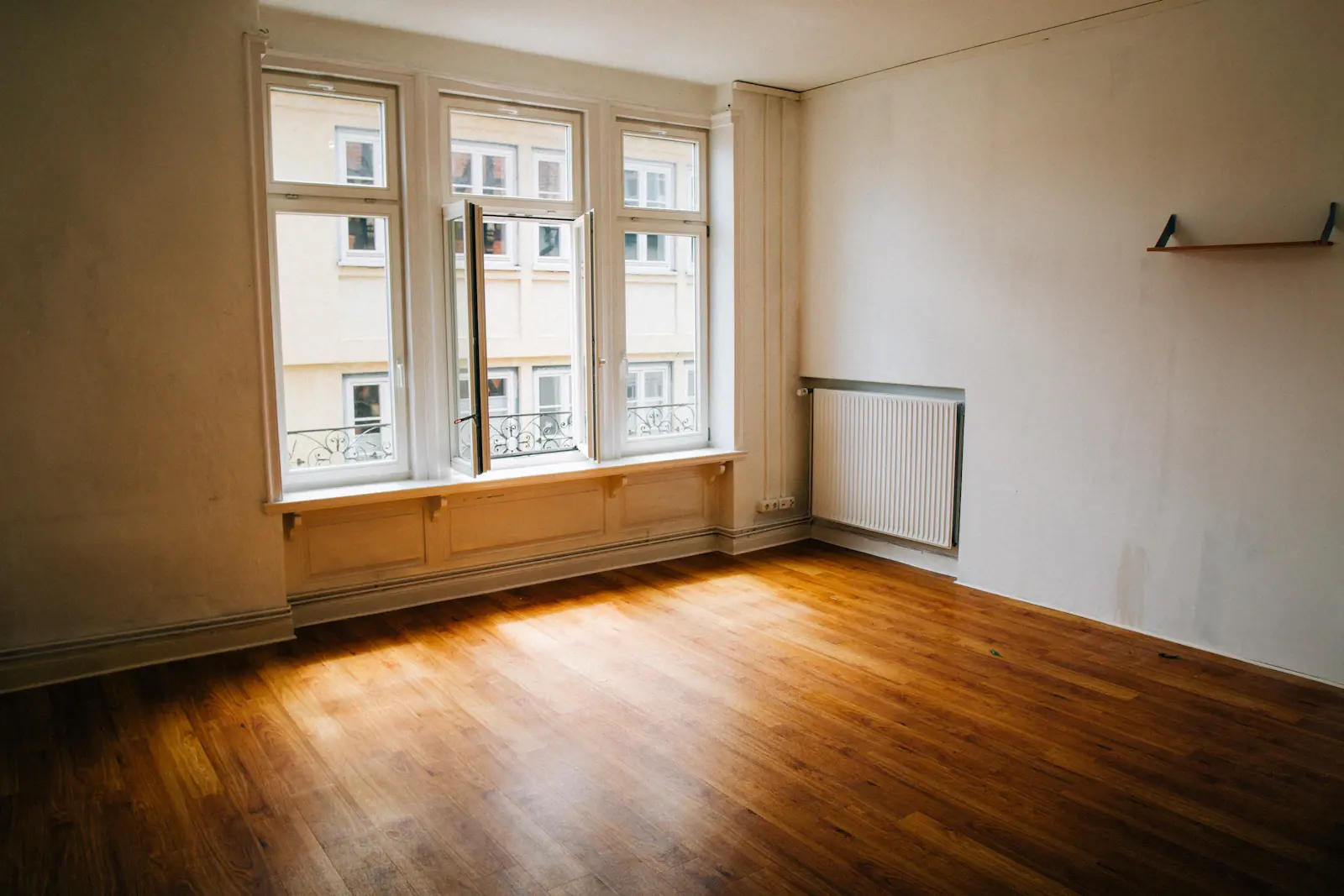
Virtual staging makes sense when the flat already exists and is empty or furnished in a way that does not help. It is common with second homes on the Costa Brava that are sold or let empty. It starts from a real photo and adds furniture, curtains and light so that buyers understand the size of each room.
To commission it you need sharp, straight photos of each room, the real measurements and a list of what stays and what goes. The honest limit is furnishing. Hiding damp, changing windows or removing a column means showing a flat that does not exist. Publish the original photo next to the staged one.
Want us to look at your case? Leave us your details and we’ll tell you where we would start.
Let's talkWhat does AI do well, and where does it still fail?
AI is good for testing ideas in minutes. You can see three decoration styles for the same living room, change the time of day or prepare a mood image for social media. For internal use it is fast and good enough.
Where it fails is in what a buyer will later measure. It invents windows, moves doors, changes proportions and picks materials nobody chose. Many tools mix a 3D model with AI retouching, and the result can look like a reliable render without being one. Check every image against the plans before you publish it.
Does a 3D render made from the plans need an AI label too?
Article 50 covers content generated or manipulated by an AI system. A render calculated with 3D software from the plans is not, in principle, AI-generated content. If you then run it through an AI tool to change materials or add people and the result looks real, disclose it. For new builds, the Catalan Housing Act (Article 59) requires you to say whether the home is finished, under construction or planned.
What are the risks of showing something that does not exist?
The first risk is legal. Catalonia’s Housing Act (Llei 18/2007) says that offers, promotion and advertising of homes must follow the principle of truthfulness and must not mislead buyers in a way that has economic consequences (Article 58.3). It also says that the data and features included in advertising can be claimed by the buyer later, even if they are not in the contract (Article 58.4).
The second risk is commercial. If the image promises light, a view or a kitchen that is not there, the viewing ends in disappointment. For new builds, the same act requires every advert to state whether the home is finished, under construction or only planned, and to give the usable and built floor areas (Article 59).
What do you have to disclose in the listing and on your website?
The EU AI Act (Regulation (EU) 2024/1689) applies from 2 August 2026 (Article 113). Article 50(4) says that deployers of an AI system that generates or manipulates image, audio or video content constituting a deep fake shall disclose that the content has been artificially generated or manipulated. A deployer is anyone using an AI system under their authority, except in a personal, non-professional activity (Article 3(4)).
The regulation defines a deep fake as AI-generated or manipulated image, audio or video content that resembles existing persons, objects, places, entities or events and would falsely appear to a person to be authentic or truthful (Article 3(60)). If your image fits that definition, you have to disclose it. If you are not sure, disclose anyway. Put the notice on the image and in the listing text, even when the only change is virtual furniture.
Article 50(2) asks the providers of the tools to mark their outputs in a machine-readable format. If the tool was already on the market before 2 August 2026, its provider has until 2 December 2026 to comply (Article 111(4), added by Regulation (EU) 2026/1744). The European Commission has published a voluntary code of practice, guidelines on Article 50 and a set of icons for labelling such content.
How should the notice be shown so that it counts?
Article 50(5) of the regulation says the information must be provided in a clear and distinguishable manner, at the latest at the time of the first exposure. In practice, that means a short text on the image and a sentence in the listing description. The European Commission has published icons you can use. Keep the original photo in case someone asks for it.
How to choose depending on the stage of the sale
Start with what exists today and who will see the image. These situations come up again and again in Girona and on the Costa Brava. If yours is a mix, combine techniques and disclose in every image what is not real.
- Off-plan development in Girona. A 3D render from the plans and the specification, with a notice that the home is planned or under construction.
- Empty flat on the Costa Brava, for sale or to let. Real photos plus virtual staging of a couple of rooms, with a virtual furniture notice.
- Full renovation of an old flat. A 3D render of the renovated state from the project, published next to photos of the current state.
- Decoration ideas or social media tests. An AI image, checked against reality and labelled as AI if published.
