

On this page
What an investor does with your website before the call
Your website is the first filter. A fund analyst will often get your deck by email or meet you at a partnering session, then open the website to check what you do, your stage and your team. If the website says something different from the deck, or has not been updated in a year, the first impression is already one of doubt.
The capital reaching the sector is growing, and much of it comes from abroad. According to AseBio, Spanish biotech companies raised 408 million euros in 2025, more than double the 2024 figure, and 302 million came through deals with international investors. Biocat reports that 82% of 2025 deals in Catalan health startups and scaleups involved investors from abroad. An English version is essential.
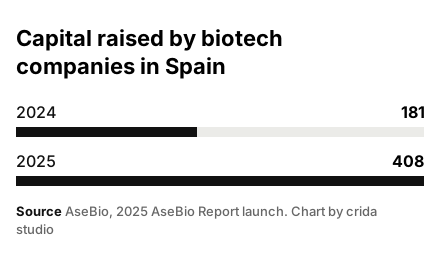
| Year | Millions of euros |
|---|---|
| 2024 | 181 |
| 2025 | 408 |
How to explain your pipeline or platform without jargon
Investors want to see at a glance which candidates you have, for which indication, what modality they are and what stage they have reached, from discovery to preclinical or clinical development. A simple pipeline table or chart says this better than three paragraphs. If you are a platform company, explain what makes the technology different and which applications or partnerships it opens up.
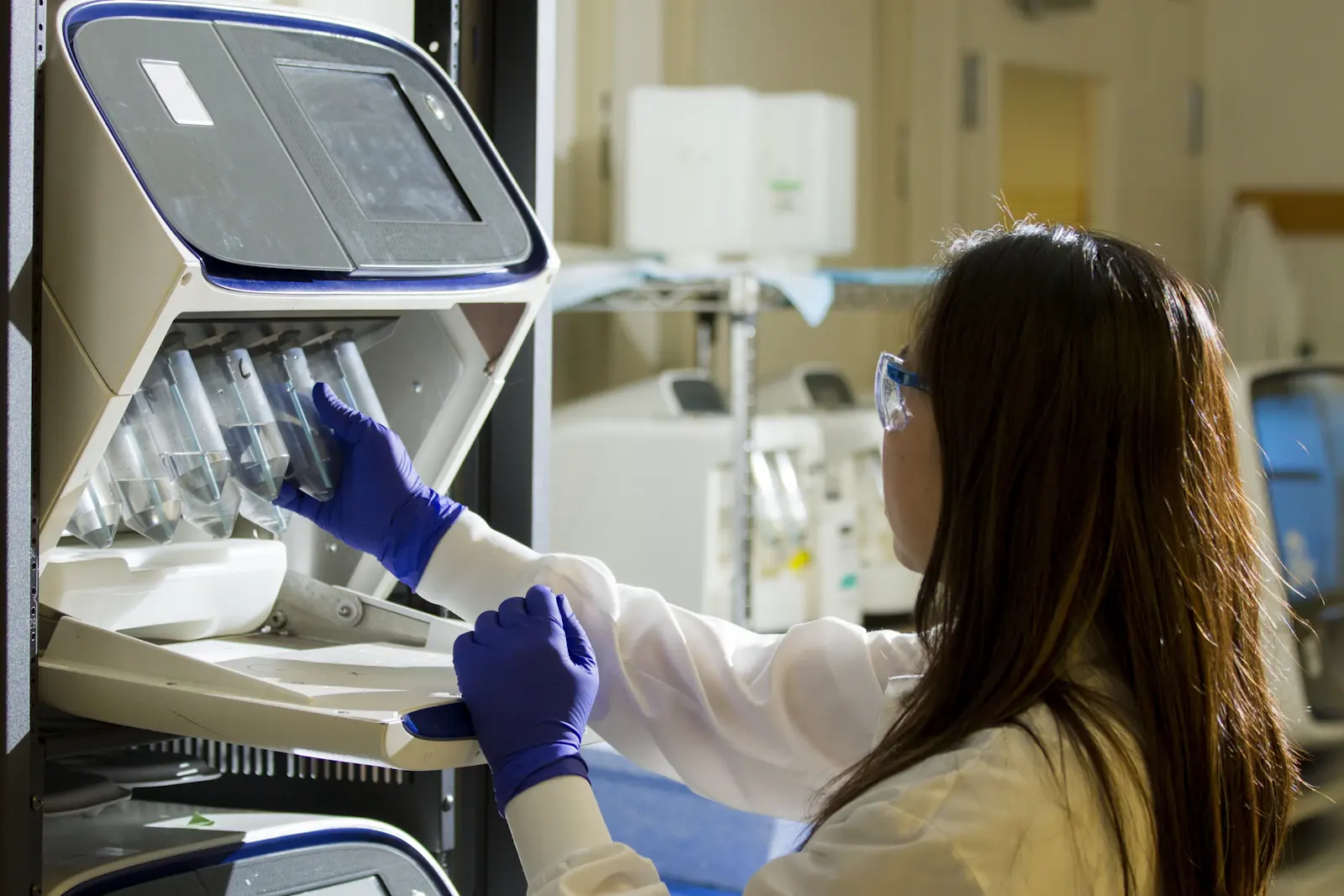
Write each explanation on two levels. First, one sentence a non-specialist can follow. Then a more technical layer for the fund's scientific adviser. Diagrams of the mechanism and real photos from the lab help far more than generic illustrations.
Should we put our pitch deck on the website?
Better not to make it public. The deck changes often, contains information you do not want freely available and it pays to know who reads it. On the website, a clear summary plus a form or an address to request the deck is enough. That also tells you which funds are interested in you.
Team and advisers, with names and track records
In a biotech startup, the team carries as much weight as the science. Every founder and key person should have a photo, a role, the experience that matters for the project and a link to their LinkedIn profile. The scientific advisory board belongs there too, with each member's institution.
If a key profile is still missing, such as a chief medical or business officer, the website should not paper over it. The investor will spot it in the meeting anyway. Logos of the university, accelerators or programmes that have funded you help, as long as you have permission to use them.
Want us to check whether your website explains the pipeline and team the way investors look for them? Leave your details and we will tell you what to change first.
Review my websitePatents and milestones, explained clearly
Describe your intellectual property as far as you can in public. For example, whether you have patent applications on file, whether they are your own or licensed from a university and which territories they cover. Technical details that have not been published yet belong in the meeting and the data room.
Milestones work the same way. Past ones come with dates, such as incorporation, the first round, preclinical proof of concept or a grant awarded. Future ones are goals, without promising dates you do not control, such as the start of a clinical trial, which needs approval from the regulator.
Does a biotech startup website need an investor section?
At an early stage, a short page is enough. It should say what kind of investors or partners you are looking for, what stage the company is at and how to reach the person who handles those conversations. Round figures and financial details are shared privately, in the meeting or the data room.
What is better kept off your website
Article 54 of the European Patent Convention treats everything made public before the filing date as part of the state of the art. An overly detailed website can cost an invention its novelty. Article 87 of Directive 2001/83/EC also requires member states to ban advertising of medicines without a marketing authorisation. So your pipeline page should speak to investors and partners and never present a candidate as an available treatment.
- Efficacy data that has not been published or peer reviewed.
- Details of the invention before the patent application is filed.
- Names of partners or customers without their permission.
- Milestone dates that depend on third parties.
- Claims that promise to cure or treat a disease.
How often should a startup update its website?
Every time you hit a milestone. A funding round, a new team member, a scientific publication, a patent filing or a new partnership are all reasons to update the site. A news page that has not moved for months makes investors wonder whether the company has stalled too.
Your website and deck must describe the same company
The deck is shared privately and goes into more detail, while the website is the public summary. Both should use the same names, the same stage and the same figures. When something important changes, such as a new round, a key hire or newly published data, update the website first, because that is what investors check before they reply to your email.
