
On this page
One shoot with three clear uses
Before you book the day, decide who will watch each version and what they need to decide. On your website, a buyer comparing suppliers opens the video. At the booth, someone walking down the aisle sees it with no sound. After a meeting, a process engineer watches it to check one detail. Three audiences, but the footage can be the same.
That is why the script is a shot list, each shot with a clean start and end, so the clips can be recombined in different orders later. Engineering reviews it before the shoot, because a step done wrong on camera will come up in a customer meeting sooner or later.
The shots a bioreactor or TFF demo cannot do without
The list depends on the system, but in bioprocessing the same moments come up almost every time. These are the steps a buyer wants to see before signing, because they show how much daily work their team will have and where things could go wrong in each batch.
Shoot in landscape, but leave room at the sides. That way the same shot can be cropped to vertical or square for LinkedIn without losing what matters, and you do not need to reshoot when a new format comes along.
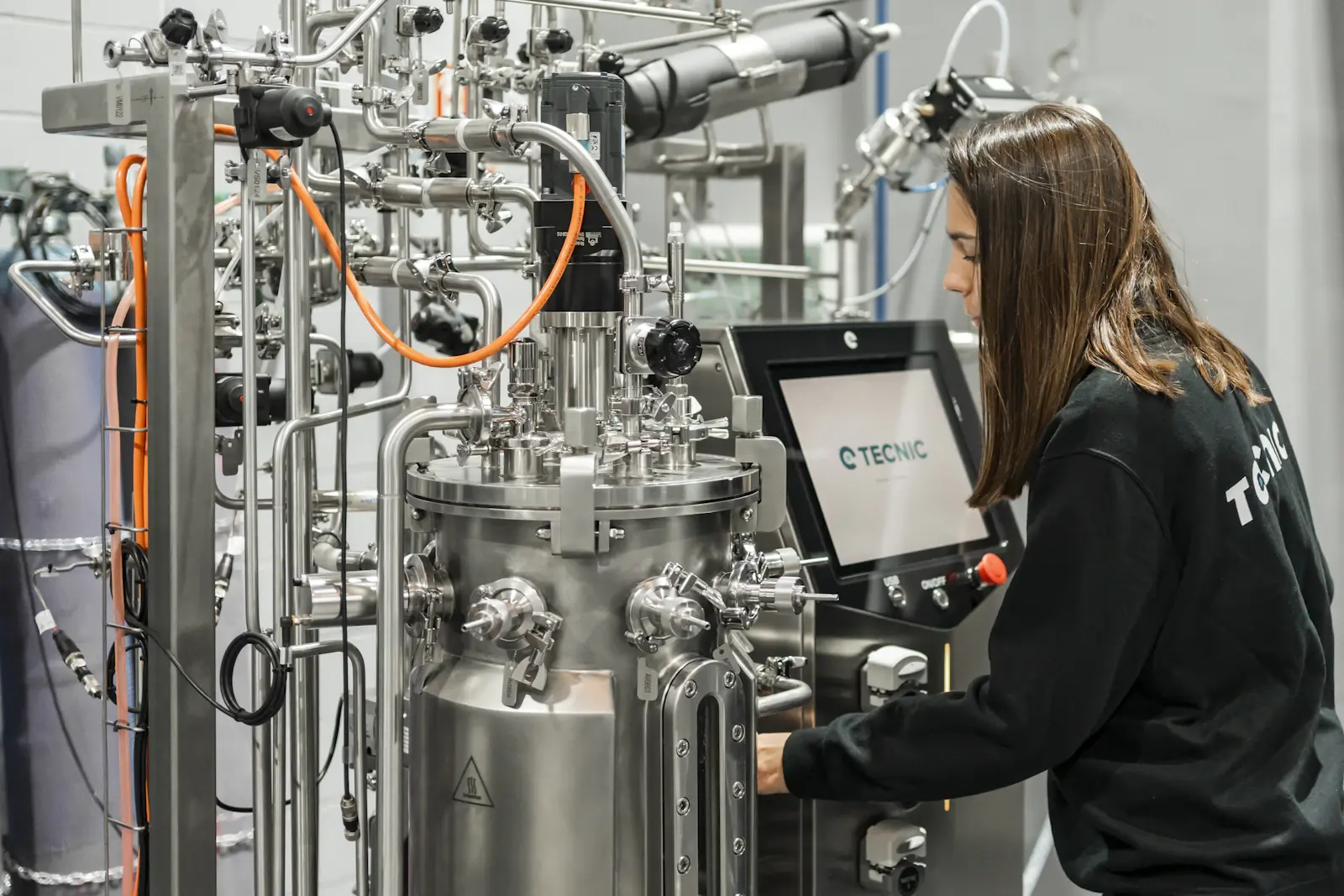
- Setup and connections, with the single-use bag going into its holder or the probes going in.
- The control software, with the recipe, trends and alarms on screen.
- Sampling, filmed close up with the operator's hands in shot.
- A bag change on a single-use system or cleaning on a stainless steel one.
- A wide shot with a person next to the system so the size is clear.
- Slow detail shots of materials, connectors and ports.
Can we film the demo at a customer's plant?
Only with their written permission and following the plant's rules. EU GMP Annex 1 (point 7.2) asks for only the minimum number of people in a cleanroom, and customers often do not want their process or facility shown. That is why it is more practical to film the demo in your own lab, workshop or showroom.
What should stay out of shot
Once a video is published you cannot take it back, and in this industry some things cannot be shown. Screens with real batch data or user names, customer logos, a customer's plant without written permission or prototype features that are not for sale yet. Filming in your own lab or workshop makes all of this much easier to control.
The video should not claim more than the system does either. A voice-over saying the system is GMP or 21 CFR Part 11 compliant creates a commitment that also depends on how the customer validates it. Show concrete features, such as the audit trail or user permissions, and leave compliance statements to the documentation.
Want us to review your demo shot list before you film? Leave your details and we will tell you what we would add or cut.
Review my shot listThe website version, with its own page and captions
Google recommends a dedicated watch page for each video if you want it to appear in video results and key moments. The page must be indexed, the video cannot be hidden behind other elements and the thumbnail needs a stable URL. Key moments can be marked with structured data or in the YouTube description, which suits a demo split into steps.
The video should not slow the page down either. According to web.dev, a good experience means the main content loads within 2.5 seconds and CLS, which measures how much the page shifts while loading, stays at 0.1 or less. Reserve space for the player and add reviewed captions, because W3C says automatic ones are not enough unless confirmed accurate.
Video or 3D render to show the equipment?
They do different jobs. Video proves the system exists and shows how it is really used. A render shows the inside, a system that has not been built yet or a cleanroom that cannot be photographed. On the same product page they work well together, the render to explain what it is and the video to show how people work with it.
The booth loop and industry events
At a trade show the video has to work without sound. Large text, captions burned into the picture and shots that make sense in a few seconds, because nobody watches from the start. A short loop of the key steps, in the same order your sales engineer follows when demonstrating live, keeps the screen and the conversation in sync.
David Monje, founder of crida studio, organised TECNIC Bioprocess Solutions' presence at the #MEVO 2024 event while he led its marketing. The summary video TECNIC published on 7 May 2024 shows the interactive showroom, the equipment and expert opinions. An event like this is also a good day to film material for the website and for sales.
 Play the video. Exploring the Future of Biotech with TECNIC at #MEVO 2024 | An Exclusive Insight
Do we need a voice-over?
For the website and for sales, a voice-over or well-written captions help viewers follow the steps. For the booth, everything should make sense without sound. In every case, captions should be checked by hand, because W3C points out that automatic captions are often wrong and sometimes change the meaning of what is said.
Short clips for sales follow-up
After a meeting, sales should not send the long video. They should send the clip that answers the question that came up, such as the bag change, cleaning or how batch data is exported. If each step is a separate clip with a clear title and its own link, the buyer can forward it to quality or production.
We cut these clips from the same footage, with on-screen text and captions in the languages the customer sells in. Stored in a library organised by system and by step, they are easy for sales to find without asking marketing every time.
