

On this page
Why qualification is a strong sales topic
Annex 15 of the EU GMP guidelines says the URS should be a point of reference throughout the validation life cycle (point 3.2). It also says that, before installation, equipment should be confirmed to meet the URS at the vendor site where applicable (point 3.5), and that FAT may be supplemented by a SAT once the equipment reaches the plant (point 3.7). Buyers need the manufacturer at every step.
That is why content explaining how you handle these steps answers a real concern. ISPE publishes a reference guide on commissioning and qualification, released in June 2019, with best practices for URS, design review, DQ and acceptance. Your customer's quality team knows the framework. What they want to know is how you will work within it.
A checklist to help buyers prepare their URS
The customer writes the URS, but often does not know where to start with a new type of system. A downloadable checklist helps them cover everything and gets them thinking about the questions your team answers well. It is one of the few pieces where asking for contact details makes sense, because whoever downloads it has a project in view.
It has to be neutral. If the checklist only leads to your own system's features, buyers notice and stop using it. It should still be useful even if they end up buying from someone else or decide to wait another year.
- Working volume, organism or cell line, and application.
- Single-use or stainless steel, and what that means for consumables or CIP and SIP cleaning.
- Control, data recording and 21 CFR Part 11 or plant system integration requirements.
- Plant utilities, available space and installation access.
- Documentation expected from the manufacturer for FAT, SAT and qualification.
Are we giving engineering work away for free?
Not if the content stays general. A URS checklist or a FAT outline explains how you work, it does not solve the customer's project. Your response to their URS, specific protocols and data on their system stay within the sales process, under NDA if needed.
A FAT and SAT outline buyers can read before they buy
A page explaining how you run FAT answers questions that would otherwise come up late. Which tests happen at the factory, which documents the customer receives, who can attend and what is tested again at the plant during SAT. If each step has a sample document, the buyer can pass it to quality before deciding.
Annex 15 (point 3.6) says that, where appropriate and justified, documentation review and some tests performed at FAT need not be repeated at IQ or OQ, if it can be shown that transport and installation do not affect functionality. Explaining how you document this is a strong argument, as long as you never promise what the customer's quality team will accept.
Want us to look at which FAT or qualification documents you could publish without giving away anything confidential? Leave your details and we will talk it through.
Check my documentsWhat goes into your qualification support pack
According to Annex 15 (point 3.9), IQ includes, among other things, checking the installation against drawings, collecting the supplier's operating and maintenance instructions, calibrating instruments and verifying materials of construction. OQ tests upper and lower operating limits and worst-case conditions (point 3.11). Much of that documentation comes from the equipment manufacturer.
Publishing the index of your pack, with one sample page from each document, shows buyers what they will receive without giving away anything confidential. PQ depends on the customer's process and is carried out by them. Your content can explain how you support it, but should not present it as your own work.
Can we say our system is GMP compliant?
Better not to put it that way. GMP and Annex 15 are addressed to medicine manufacturers, who qualify the equipment in their own plant. The equipment manufacturer supports them with design, documentation and testing. Your content should explain that support with concrete facts and avoid claims that depend on the customer.
Marketing writes it, engineering signs it off
Marketing can structure and write this content, but every technical claim needs review by engineering or quality. No customer data, a version and date on every document, and no words like «compliant» or «guaranteed» unless a document backs them up.
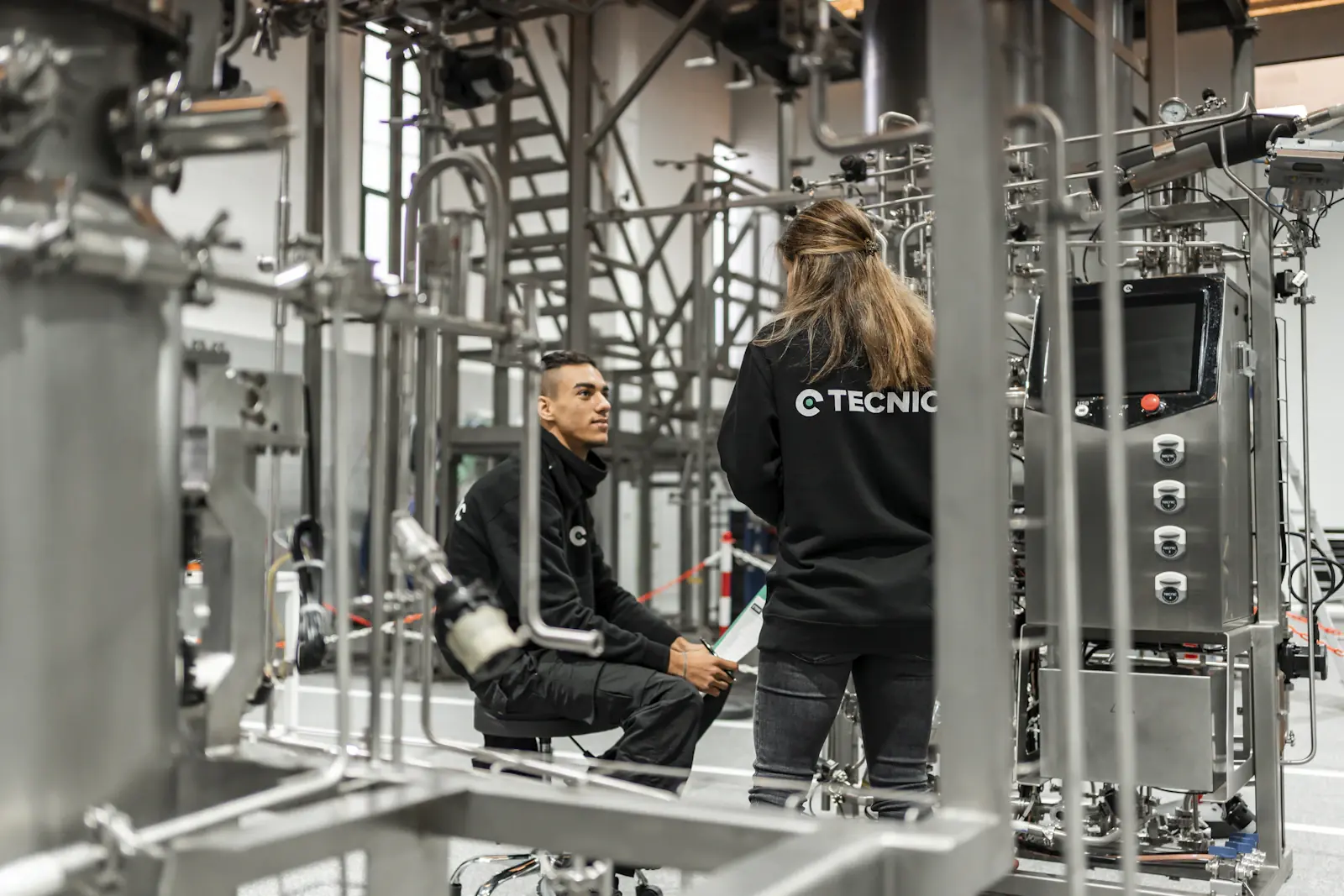
David Monje, founder of crida studio, led marketing at TECNIC Bioprocess Solutions for four and a half years. There he bridged engineering, product and sales to open markets such as Germany, Scandinavia and Asia. Content like this only works when those three teams sit down together and each brings what they know.
Which document should we create first?
The one that answers the question you hear most. If every proposal ends with the same FAT questions, start with the FAT and SAT outline. If projects arrive without a clear URS, build the checklist. Ask your sales reps and application engineers which questions they answer most often and decide from there.
Where to use this content so it helps sales
Each piece has its place. The FAT and SAT outline and the qualification pack index go on your website, ungated and close to each product page. The URS checklist sits behind a form with automated follow-up. All of it also works in proposals, at trade shows and in a webinar with your engineers.
- On your website, as text with no form, next to each product page.
- In proposals, as an appendix the customer's quality team can review.
- At trade shows, printed or behind a QR code at the booth.
- In German and other languages for the markets you sell into.
