

On this page
Is a YouTube channel worth it for an equipment manufacturer?
It is worth it if you treat it as a library of technical answers. Nobody buying bioprocess equipment subscribes for entertainment. They land on a video from a specific search, on YouTube or Google, when they want to see how a system is assembled or how a consumable is swapped. The channel stores those videos and keeps them in order.
YouTube hosts the video and you embed it on your site without dealing with servers or file formats. What it will not do on its own is bring in viewers. Views come from the title, the description and the page you give it on your website, and that is where the work goes.
The videos technical buyers actually search for
The videos that work answer a question someone types into a search box before asking for a quote. You can find those questions in sales calls, service tickets and Search Console queries. These five formats cover much of what a process engineer or lab manager wants to know.
- Setup and commissioning, step by step, with connections and control software.
- Cleaning, maintenance and consumable changes, such as a single-use bag or a TFF filter.
- Scale-up explained, from lab volumes to pilot plant and production.
- Comparisons of approaches, such as single-use or stainless steel, without naming any competitor.
- Application examples, such as monoclonal antibodies, vaccines or microbial fermentation.
How many videos do I need to start a channel?
Start with the five or six questions your sales and service teams hear most often and make one clip for each. A small channel whose videos answer real questions does more for you than a large one without structure. Then add new videos as fresh questions come up at trade shows, in demos or in Search Console.
One short clip per question
A long video that walks through the whole catalogue is hard to find, because it matches no specific search. A one minute clip that answers a single question, such as how to scale a TFF system without losing performance, gets a clear title and fits neatly on the product page.
David Monje, founder of crida studio, led marketing at TECNIC Bioprocess Solutions for four and a half years. On 1 November 2026, a search for «TFF system» on Google Spain from a signed-out browser showed a video from TECNIC's channel in second place. That is work David directed there. It is a snapshot of that day, and rankings change.
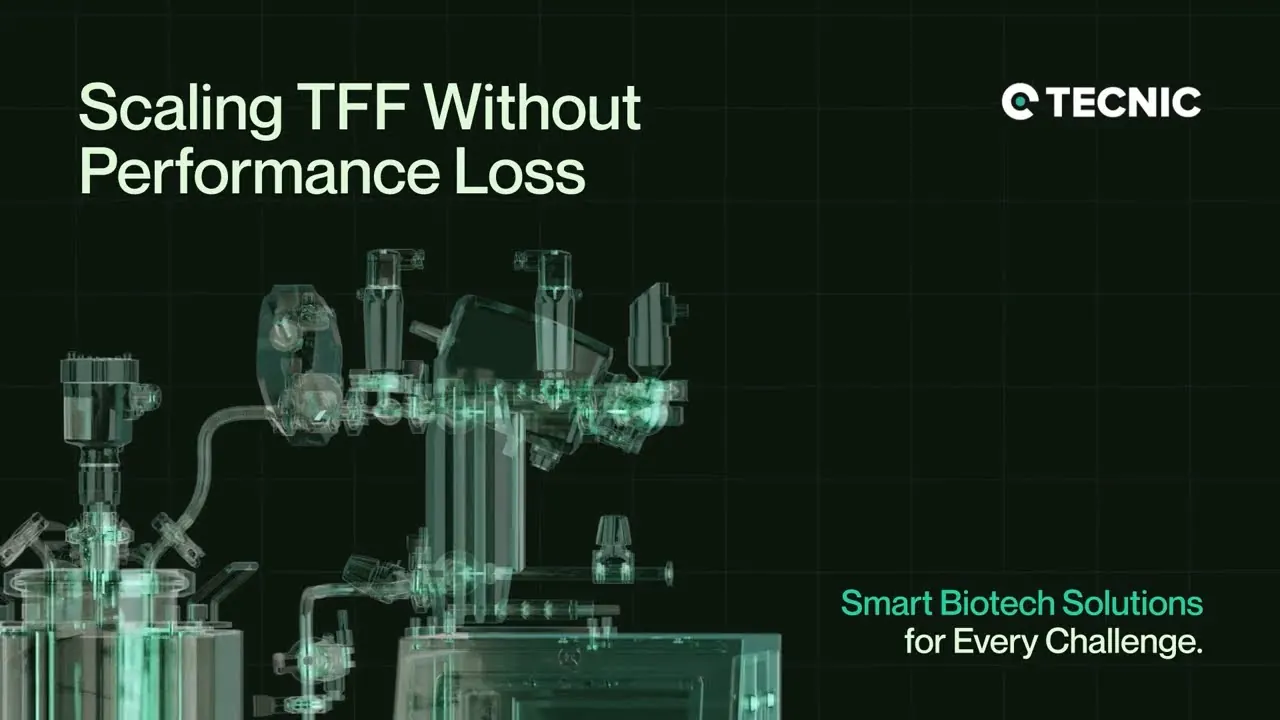 Play the video. Scaling TFF without performance loss - TECNIC
Want us to check which videos are missing for the questions your buyers ask? Leave your details and we will tell you where we would start.
Review my channelTitles, descriptions and chapters in the words engineers use
Put the words an engineer would type in the title, such as the equipment type, the task and the scale, rather than the internal model name. «How to change the bag on a 50 litre single-use bioreactor» gets found. «Introducing our new model» only interests people who already know you. Use the description to say in two or three sentences what the video shows, and link to the product page.
Chapters come from timestamps in the description. According to YouTube Help, the first one must start at zero, you need at least three in ascending order and each chapter must last at least ten seconds. Automatic chapters are switched on by default for new uploads, but not every video is eligible. If you add your own, they override the automatic ones.
Label each chapter with search terms, such as «connecting the permeate line» or «filter integrity test». Google's video guidance says that for YouTube videos it can show key moments based on the timestamps and labels in the description, and that it gives priority to key moments you set yourself.
Should I use YouTube or host videos on my own website?
The two work well together. YouTube stores the video and gives buyers a second place to find it, while your website holds a dedicated watch page for each video with the embed, supporting text and a link to the product. Google says that when you embed a YouTube video, it may index it both on your page and on YouTube.
Subtitles in the languages of your markets
If you sell into Germany, Scandinavia or Asia, your videos should carry subtitles in those languages. YouTube points out that subtitles and captions help you reach deaf or hard of hearing viewers and people who speak another language.
You add subtitles in YouTube Studio through the add language option. You can upload a file with or without timing, or use auto-sync, which lines a transcript up with the video. The transcript has to be in the spoken language, and YouTube does not recommend it for videos over an hour long or with poor audio. Automatic captions are only available in the video's default language.
Playlists by product line and by application
Organise the channel into playlists that match the way buyers search. Create one playlist per product line, such as bioreactors, TFF systems or consumables, and another per application, such as cell therapy or fermentation. That way, someone who arrives through one clip finds the next without going back to search. Use the same product line and application names as on your website and in your catalogue.
Do I need a separate video for each language?
Usually not. If the video relies on visuals and on-screen text, one version with subtitles in several languages is enough. If it has a voice-over and one market matters a lot, such as Germany, a dubbed version can be worth it. Either way, have someone from the industry who speaks that language check the terminology.
A dedicated watch page on your website for each video
To get the video into Google's video results as well, embed it on a page of your site where the video is the main content. Google calls this a watch page and recommends a dedicated one for each video, where that makes sense for your business. A product page with a video next to the specs does not count, but the same video can sit on both pages.
When the video is on YouTube, Google may index it both on your page and on YouTube, and either can show up. Add VideoObject structured data with the name, thumbnail and upload date, which Google requires, plus a unique description. A written summary next to the video gives search engines and AI assistants text they can read.
