

On this page
Why distributors need a complete kit
Without a kit, each distributor ends up making their own material. They translate datasheets as best they can, use old photos, change the colours and sometimes promise things the equipment does not do, such as GMP compliance that in fact depends on the customer. The result is a different brand in every country and a technical risk that the manufacturer ends up paying for.
A distributor carries many brands and has little time for each. If your material is translated, organised and ready to use, they are more likely to include you in visits and quotes. The kit is how you sell through others without losing control of what is said about your equipment.
Datasheets and application notes in the distributor's language
The core of the kit is translated technical documentation. Datasheets for each model and scale, application notes by modality, such as monoclonal antibodies, vaccines or microbial fermentation, and a document explaining what you deliver for qualification. Every PDF should carry a date and version number so nobody sends out an outdated datasheet.
Keep sales material separate from manuals. Article 10(7) of the EU Machinery Regulation 2023/1230, which applies from 20 January 2027, says the manufacturer must provide instructions for use and safety information in a language easily understood by users, as determined by the Member State concerned. And the datasheets in the kit must say the same as the manuals.
- Datasheets by model and scale, as PDF and editable text
- Application notes by modality and customer type
- A summary of documentation for URS, FAT, SAT and qualification
- An approved technical glossary in each language
- Answers to the most common objections
Who should handle translation, the manufacturer or the distributor?
The safest approach is for the manufacturer to commission the technical translation and the distributor to review it, since they know how customers in their country talk. That way you control what is said about the equipment and the distributor adds the local tone. Keep approved terms in a glossary to reuse in later translations.
Renders, photos and videos distributors can use
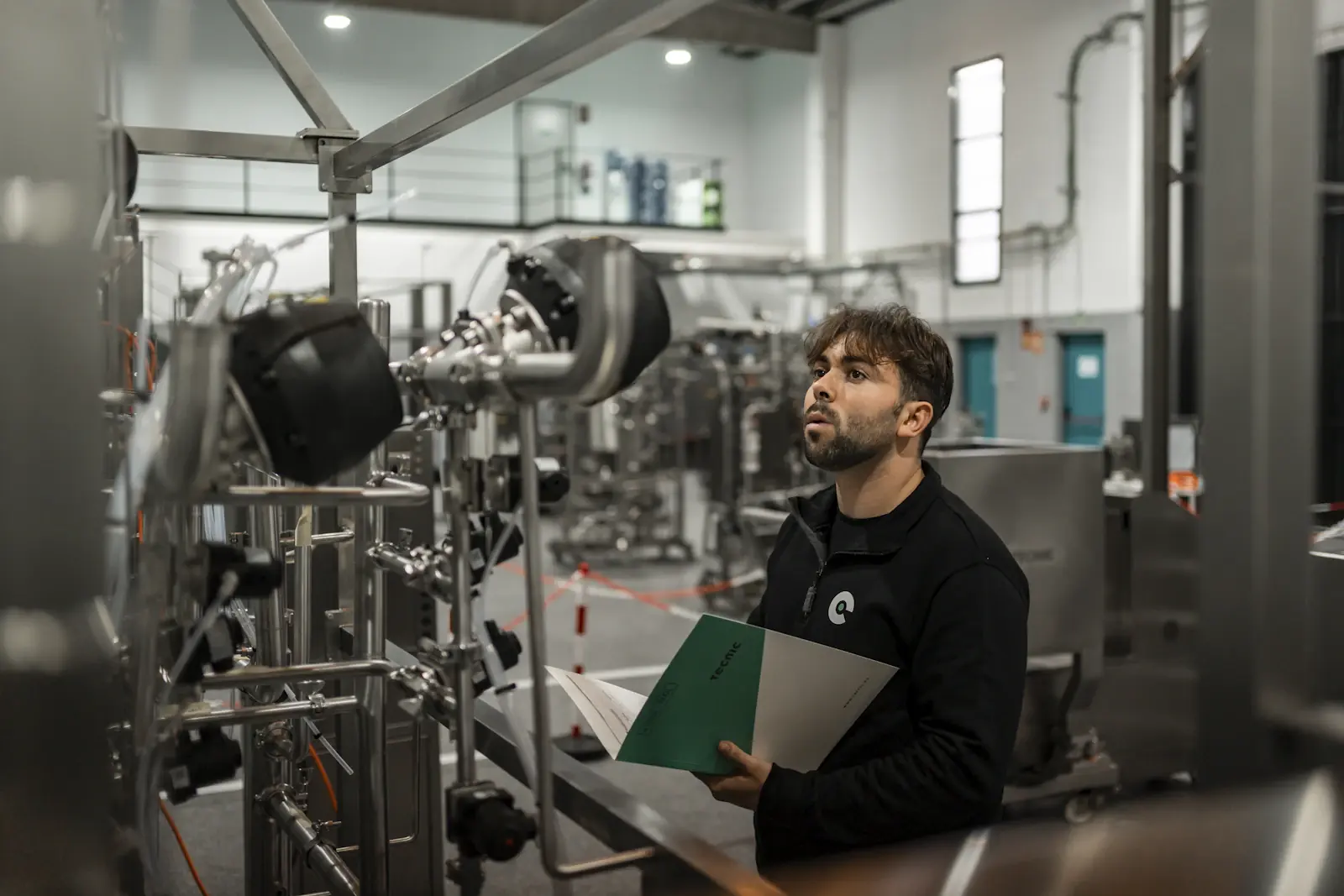
Distributors rarely have the equipment at hand to photograph. Give them high-resolution 3D renders on a neutral background showing the main configurations, real photos of the equipment in a lab or plant, and short demo videos with subtitles in their language. That way they can use the same material on their website, on LinkedIn and at trade shows.
A process animation helps explain what cannot be seen, such as flow through a TFF system or the scale-up of a single-use bioreactor. David Monje, founder of crida studio, led marketing at TECNIC Bioprocess Solutions for four and a half years, where he took technical content into 3D, animation and interactive tools.
Can I let distributors create their own material?
Yes, as long as they use your templates and brand rules and send you the important pieces for approval before publishing. Set a short review time so they do not feel held back. Local material, such as a case from a customer in their country, often works better than general material.
Want us to review the material you give distributors today and tell you what is missing? Leave your details and we will take a look.
Review my kitA sales deck without prices
The deck in the kit should not include prices, because they change over time and vary by country. Price lists go through a private channel. Also, under Article 4(a) of Regulation (EU) 2022/720, agreements that restrict the distributor's freedom to set its own resale price lose the exemption. A recommended or maximum price is allowed, as long as in practice it does not become a fixed or minimum one.
Build an editable template in the distributor's language, with room for their contact details. A structure that works is the customer's problem, the equipment and range by scale, what sets it apart, documentation and service, two or three cases and the next step. Mark which slides must not be changed.
Do I need to register my trademark in every distributor country?
It is wise to have it protected wherever you sell. The Madrid System lets you apply for many countries with one international application, but each national office decides whether to grant protection. Do it before handing your logo to a distributor and get advice from a trademark attorney.
Co-branding rules that keep one brand
Co-branding rules set out how your brand and the distributor's sit together. Where each logo goes and at what size, which colours and typefaces to use, how product names are written and which line identifies the authorised distributor. Include right and wrong examples, because people grasp them faster than rules.
Before you hand over your logo, protect the brand in the countries where you sell. WIPO's Madrid System lets you apply for protection in up to 133 countries with a single international application, based on a national or regional registration or application. Each national office then decides whether to grant protection in its territory.
Agree too how they will use your brand in Google Ads. Google's trademark policy does not restrict using a trademark as a keyword. If the owner complains about ad text, Google does not restrict it when the landing page is mainly about selling those products, shows how to buy them with commercial details such as prices and makes clear it is a reseller. It does restrict confusing or misleading use.
Can my distributor run Google Ads using my brand?
Google Ads policy does not stop anyone using a trademark as a keyword. In ad text, if the owner complains, Google still allows it when the landing page sells those products, shows commercial details and makes clear it is a reseller. The practical route is to agree it in the contract, with rules for ad copy and keywords, and to decide who runs campaigns in each country.
How to keep the kit up to date
An outdated kit does more harm than having none. Give it an owner, keep it in one place, tell distributors when there is a new version and withdraw old material. Review it at least whenever you launch equipment, change a specification or enter a new market.
Ask distributors what they use and what is missing, and check which files get downloaded. They often ask for simple things, such as a shorter datasheet, a subtitled video or a case from their sector. Those small pieces are what get your equipment into their sales visits.
